When you drive after sunset, your headlights do more than “help you see.” They set how far ahead you can read the road, spot a person crossing, or notice a stopped car in time. That matters because the risk is real: the National Safety Council reports we do about one quarter of our driving at night, yet about half of traffic deaths happen during nighttime hours.
- Less light means less time to react.
- Small defects can hide big hazards.
- Good lights reduce eye strain.
Headlight care isn’t just cosmetic. Clean, aimed, and healthy lights help you judge speed, distance, and lane edges when street lighting is poor. It’s a small habit with a real safety payoff.
How Much Light You Lose
Headlights don’t fail all at once. They fade, and drivers often adapt without noticing. AAA tested aged, cloudy headlamp lenses and found some produced only 22% of the light of new units on low beam—about a 78% drop. That’s like turning down the brightness on your only flashlight during a hike.
- Cloudy lenses scatter light upward.
- Scattered light adds glare for others.
- Your useful view distance shrinks fast.
Less forward light shortens the space you have to brake. At 60 km/h, you travel about 16.7 meters each second, so even one second less of seeing time changes the outcome. Restoring clarity brings back real road lighting and helps signs appear sooner, with less squinting.
Dirty Lenses, Shorter Vision
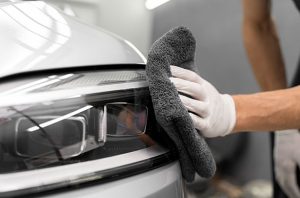
A thin film of dust, road salt, or bug residue can cut light and change the beam pattern. Modern lenses are usually polycarbonate with a UV hard coat, and that surface can get hazy from sun exposure and harsh cleaners. When the lens turns yellow, more light is absorbed instead of projected forward.
- Wash lenses with car-safe soap.
- Avoid strong household abrasives.
- Use microfiber, not dry paper.
Even a quick wipe at the fuel stop can help in rain or winter slush. Pair that with checking for moisture inside the housing, which can point to a bad seal. Water vapor diffuses light and can corrode connectors, making a small issue grow over time.
Aim Matters More Than Brightness
Even new headlights can miss the road if misaligned. Bright bulbs can still be unsafe if the beam is aimed incorrectly. If the headlights point too low, you lose distance. Too high, and you glare at oncoming drivers, reducing their ability to see. AAA’s headlight guidance notes that low beams on some vehicles can be insufficient at higher speeds on unlit roads, which makes correct aim even more important.
- A small aim shift changes the cutoff line.
- Loaded trunks can tilt the nose up.
- Potholes can knock mounts out of place.
A practical rule: park 7–8 meters from a wall on level ground and look for a crisp, even cutoff. If one side sits higher, get the aim checked.
Bulbs Age Before They Die
Most drivers replace a bulb only when it burns out, but light output drops long before that. Halogen bulbs are often rated around 500–1,000 hours, and the filament slowly thins with heat cycles. The result is a dimmer light, not an instant failure. Matching bulbs also matters: a new bulb on one side and an old one on the other can create uneven lighting and misleading depth cues.
- Replace bulbs in pairs when possible.
- Don’t touch glass with bare fingers.
- Check the correct watt rating.
If you drive two hours a night, 700 hours is under one year. Treat bulbs like wear items, similar to wiper blades, not “forever parts,” and you’ll notice steadier lighting.
Wiring Drops the Voltage
Heat, age, and vibration loosen electrical joints over the years. Headlights are simple: bulbs need a steady voltage to make steady light. Corrosion, loose grounds, and tired relays can drop voltage, and a small drop makes a big difference. For many halogen systems, a 5% voltage drop can mean noticeably less light because the filament runs cooler and produces fewer lumens.
- Look for green corrosion on connectors.
- Listen for relays clicking inconsistently.
- Watch for lights dimming at idle.
A quick test at a shop is a voltage-drop check from battery to bulb while the lights are on. Fixing a weak ground can be cheaper than new lamps, and it restores the light you already paid for.
Weather Makes Problems Worse
Rain, fog, and dusty air don’t just “make it darker.” They reflect and scatter light, so a worn lens or wrong aim gets punished. In fog, high beams can bounce back and create a bright wall, while low beams with a proper cutoff can help you see lane lines and the shoulder. That’s why clean lenses and correct aim are not optional in bad weather.
- Use low beams in fog, not high beams.
- Clear ice from the full lens surface.
- Replace cracked housings before water enters.
Also consider color temperature: very blue-white light can cause more glare in rain for some eyes, while a neutral white often feels calmer. The goal is usable contrast, not a harsh look.
Modern LEDs Need Good Cooling
LED headlights last longer than many halogens, but they’re not “set and forget.” LEDs are sensitive to heat, and heat management is handled by heatsinks, fans, and drivers. If cooling is blocked by dirt or a broken fan, the LED can dim to protect itself or fail early. Some cars also use adaptive systems; in 2022, the U.S. updated rules to allow adaptive driving beam (ADB) headlamps, and AAA has reported large lighting gains from these systems in testing.
- Keep rear covers seated to protect airflow paths.
- Don’t ignore flicker or warning messages.
- Use quality parts that match the housing.
Technology helps, but it still depends on basics: clean optics, stable power, and proper alignment.
Simple Checks You Can Do
You don’t need special tools to catch most headlight issues early. Build a quick routine that takes two minutes. Turn the lights on, walk around the car, and compare left to right. Look at the beam on a garage door and watch for a clear cutoff and even height.
- Check the low and high beams together.
- Confirm turn signals aren’t dim or fast-flashing.
- Clean lenses and the inside of the cover glass.
If the beam looks patchy, the reflector or projector lens inside may be dirty or worn, which requires a shop inspection. If one lamp looks whiter or brighter than the other, it’s a hint that the pair is aging unevenly. Small catches save bigger bills.
When to Restore or Replace
Restoration makes sense when the lens is cloudy, but the housing and mounts are solid. A proper restoration removes the damaged outer layer, then seals it with a UV-protective coating so it stays clear. Replacement is better when the lens is cracked, water keeps returning, or the internal reflector is burnt.
- Restore when the haze is only on the outside.
- Replace when moisture leaves stains inside.
- Re-aim after any repair or new parts.
AAA’s lens deterioration work shows how severe haze can slash output; getting that light back can change how soon you see hazards. After any work, verify that both lamps match in brightness and aim on a level surface, then take a short night drive to confirm.
A Clear Road Ahead
Headlight maintenance is really time management. The farther you can see, the more seconds you have to decide and brake. That’s why small steps—clean lenses, good bulbs, solid wiring, and correct aim—carry weight on every night drive. Use high beams when safe; AAA notes high beams can provide about 28% more forward illumination than low beams, which matters on unlit roads.
- Keep a spare bulb set in the glove box.
- Fix fogged housings before the rainy season.
- Recheck the aim after the suspension work.
If your lights look dull, uneven, or tiring to drive with, get them checked soon. For clear, safe lighting you can trust, book a visit with Kevals Auto Service.